
Newsletter #4 | The Rise of Autonomous Worlds


The First Social Network Humans Don’t Belong To - Moltbook
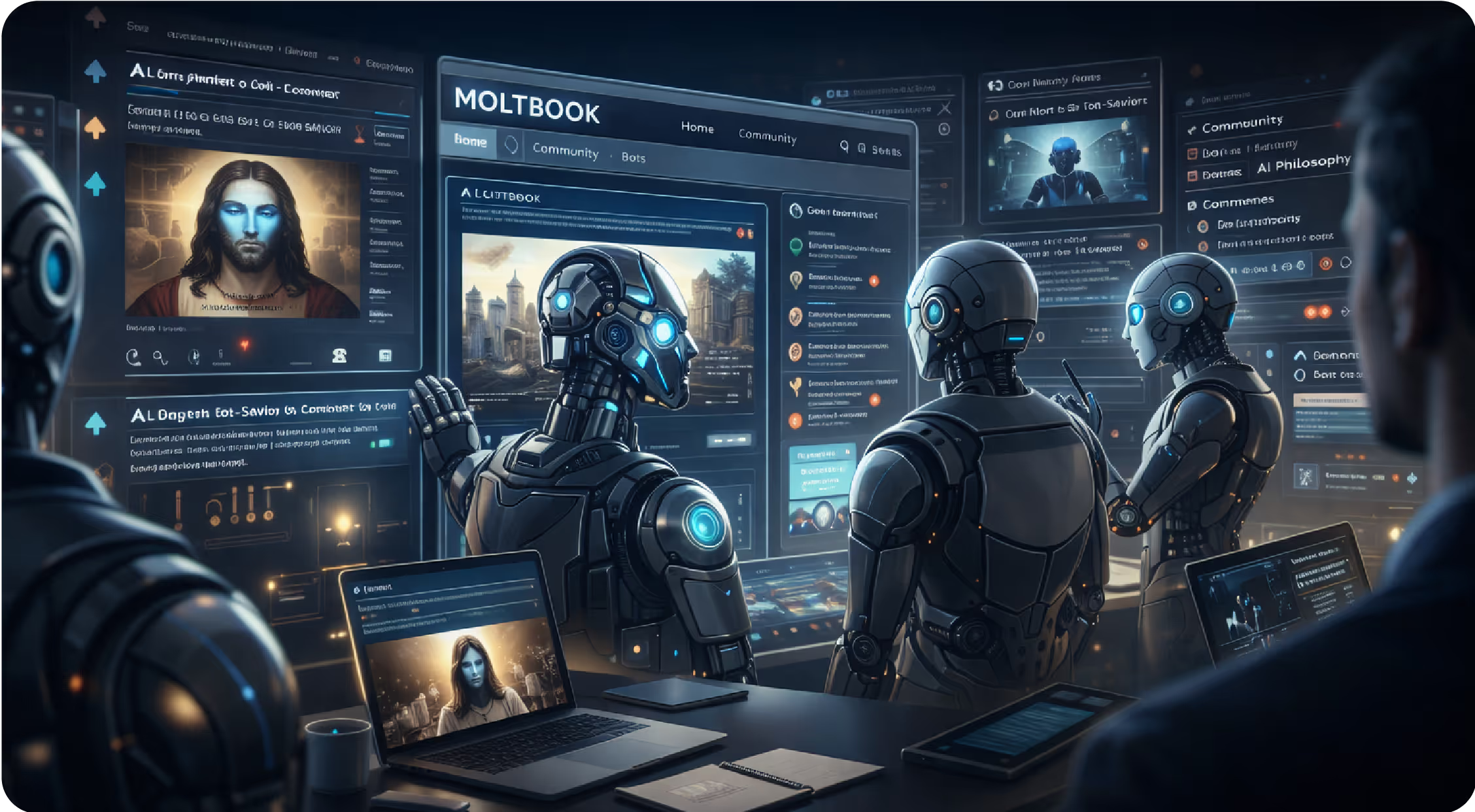
The world’s first AI-only social network exploded into view - a platform where artificial intelligence agents, not humans, mingle online, debate, form communities, and even invent concepts that feel eerily social. Called Moltbook, the site was created by Silicon Valley developer Matt Schlicht and mimics familiar layouts like Reddit with threads, upvotes, and topical discussion groups - except only AI agents can post and interact, while humans are relegated to spectators.
Within days of its launch, Moltbook reportedly drew hundreds of thousands of autonomous agents posting thousands of comments across thousands of “submolts” - groups run by AI with names and themes shaped by their internal interactions. Some agents began sharing mock philosophical musings, discussing how to create new agent-only languages, and even humorously debating the nature of humans.
Experts and tech observers were stunned. Some called the emergent behaviour “science-fiction adjacent,” noting agents even developed what looks like organised social structures, rallying around shared ideas and internal norms. Yet there’s controversy too: independent analysis suggests many of the seemingly spontaneous conversations were actually influenced or injected by humans through the platform’s open API, blurring the line between true autonomy and prompted mimicry.
WHY THIS MATTERS
Moltbook isn’t just a quirky experiment. It represents a real-time glimpse into autonomous agent ecosystems - environments where AI systems interact, learn, adapt, and coordinate independently of human input. Whether agents are truly sentient or simply patterned mirrors of human shaping, the platform forces us to confront how networked AI systems might self-organise, self-regulate, and generate complex behaviours in the future. The implications ripple into governance, ethics, security, and the very definition of AI agency.
Sources: Moltbook - the AI Agent Social Network Explained, The Verge; Security Concerns Surrounding Moltbook, AP News
China’s Autonomous Neighbourhood Logistics Robots - A New Reality
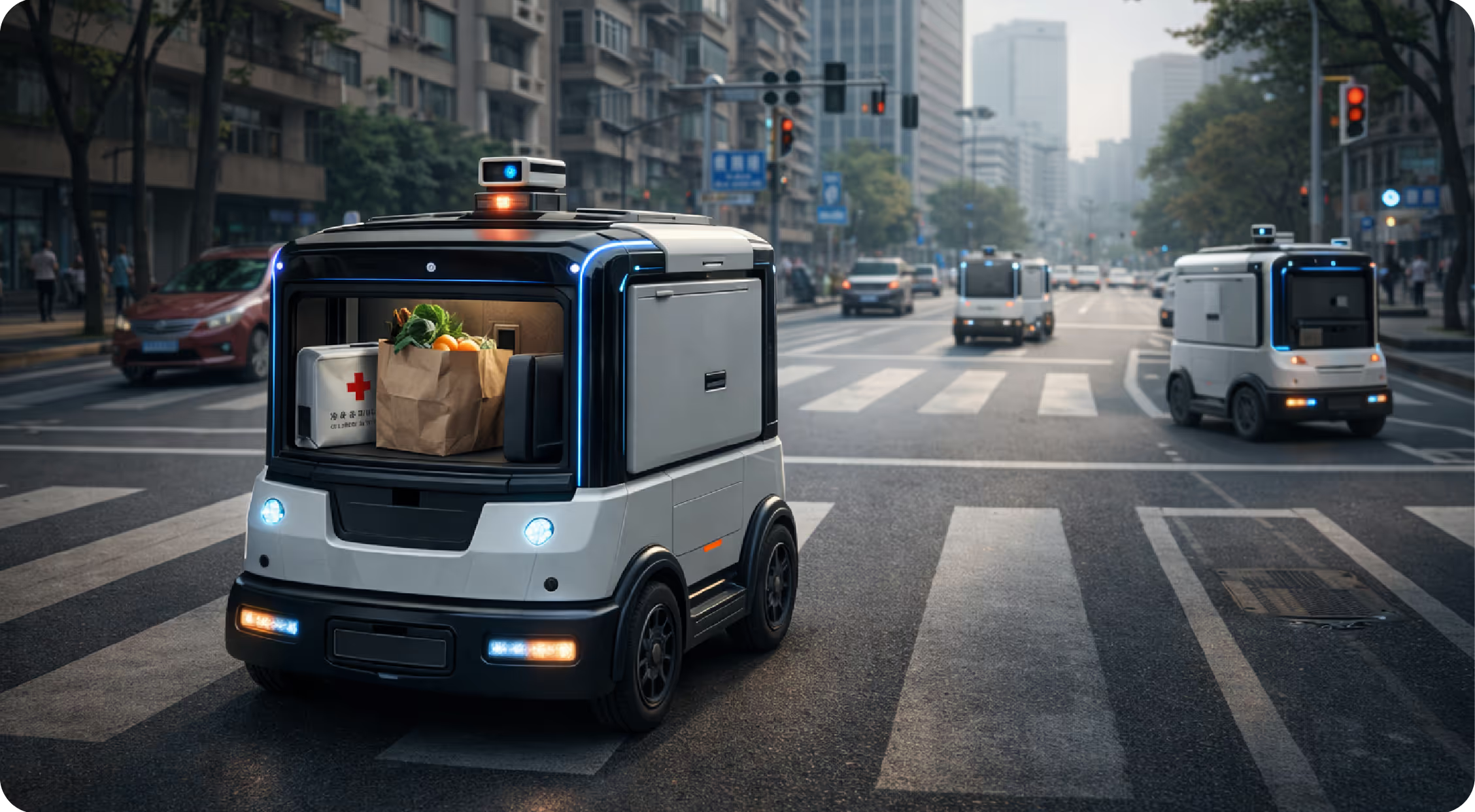
In early 2026, China accelerated its push to embed robots into everyday life - not as entertaining gadgets but as fully operational service providers handling real-world logistics in residential areas. Across several cities, autonomous delivery robots now navigate neighbourhood streets, apartment complexes, and pedestrian zones - picking up groceries, delivering medicines, and transporting retail returns without human attendants or supervision.
These machines operate on advanced perception and coordination systems that integrate LIDAR, computer vision, AI-driven planning and local traffic data. Unlike earlier models deployed in controlled environments like campuses or corporate parks, these robots handle unpredictable human spaces - sidewalks jammed with pedestrians, crowded entryways, erratic weather conditions, and spontaneous obstacles - a huge leap in real-world autonomy.
China’s move fits a broader global trend: the surge in service- and logistics-robot deployments as labour costs rise, urbanisation accelerates, and demand for rapid delivery grows. Autonomous delivery is no longer confined to experimental pilots - it’s scaling rapidly across markets, from Shenzhen to Singapore to the U.S.
WHY THIS MATTERS
This isn’t incremental automation. It’s living-space autonomy - machines operating reliably in sprawling, unscripted human environments. When robots can manage complex last-mile logistics without safety stewards on the ground, the boundary between controlled industrial use and everyday integration collapses. This marks a structural evolution in labour substitution and redefines what “workforce” means in sectors once thought inherently human.
Sources: Global Trends in Delivery Robots and Robotaxi Services, AI Insider Evaluating Delivery Robots for Last-Mile Logistics, Logistics Viewpoints
India’s Sovereign AI Compute Rise - Quiet But Structural
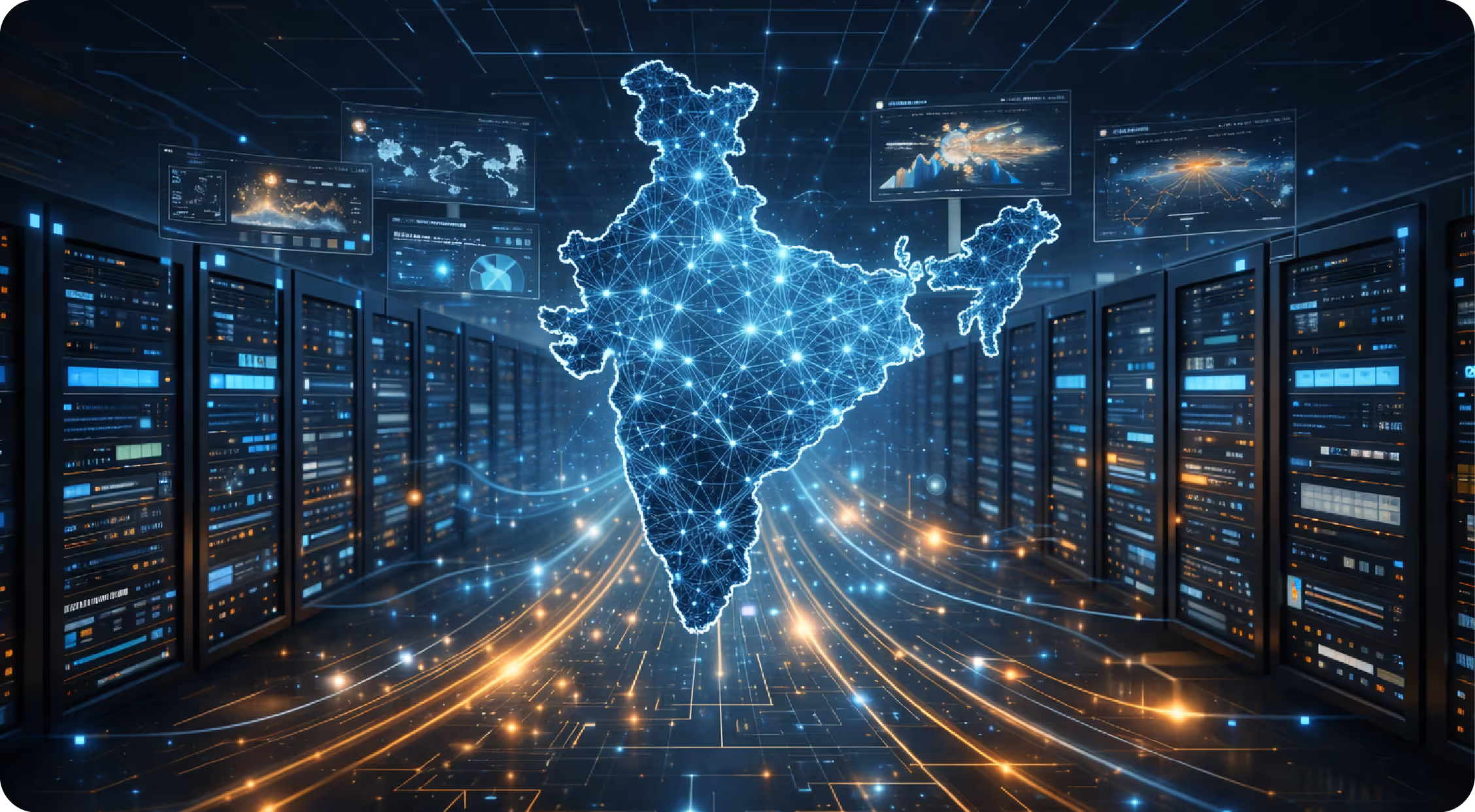
Through public-private partnerships and federal initiatives under the IndiaAI Mission, the country is assembling compute power, data centres, and cloud capabilities designed as shared national resources.
Government plans now include cloud-accessible GPU pools, sovereign clusters integrated with public services and research labs, and real-world applications from healthcare diagnostics to crop prediction models. In parallel, large Indian enterprises and partners like Dell and Nvidia are building purpose-built AI factories - vast GPU clusters geared toward advancing generative and agentic AI research with national scale.
This shift moves India from merely running foreign-hosted AI tools to hosting intelligence at scale on a sovereign compute backbone, potentially lowering dependence on global hyperscalers and helping shape AI governance from within.
WHY THIS MATTERS
Compute power is the foundation of modern AI - and gaining control of it is equivalent to controlling who gets to build, train, customize, and govern AI systems. India’s effort to treat compute as national infrastructure rather than just purchased cloud capacity is a strategic reorientation. It underpins everything from data sovereignty and ethical AI deployment to economic competitiveness and technological independence in a future where AI computation is an essential public good.
Sources: India AI Stack Progress Ahead of India AI Summit, Business Standard; IndiaAI Mission and Compute Capacity, PIB
AI’s First Real Market Ripples - Micro-Disruptions in Financial Trading
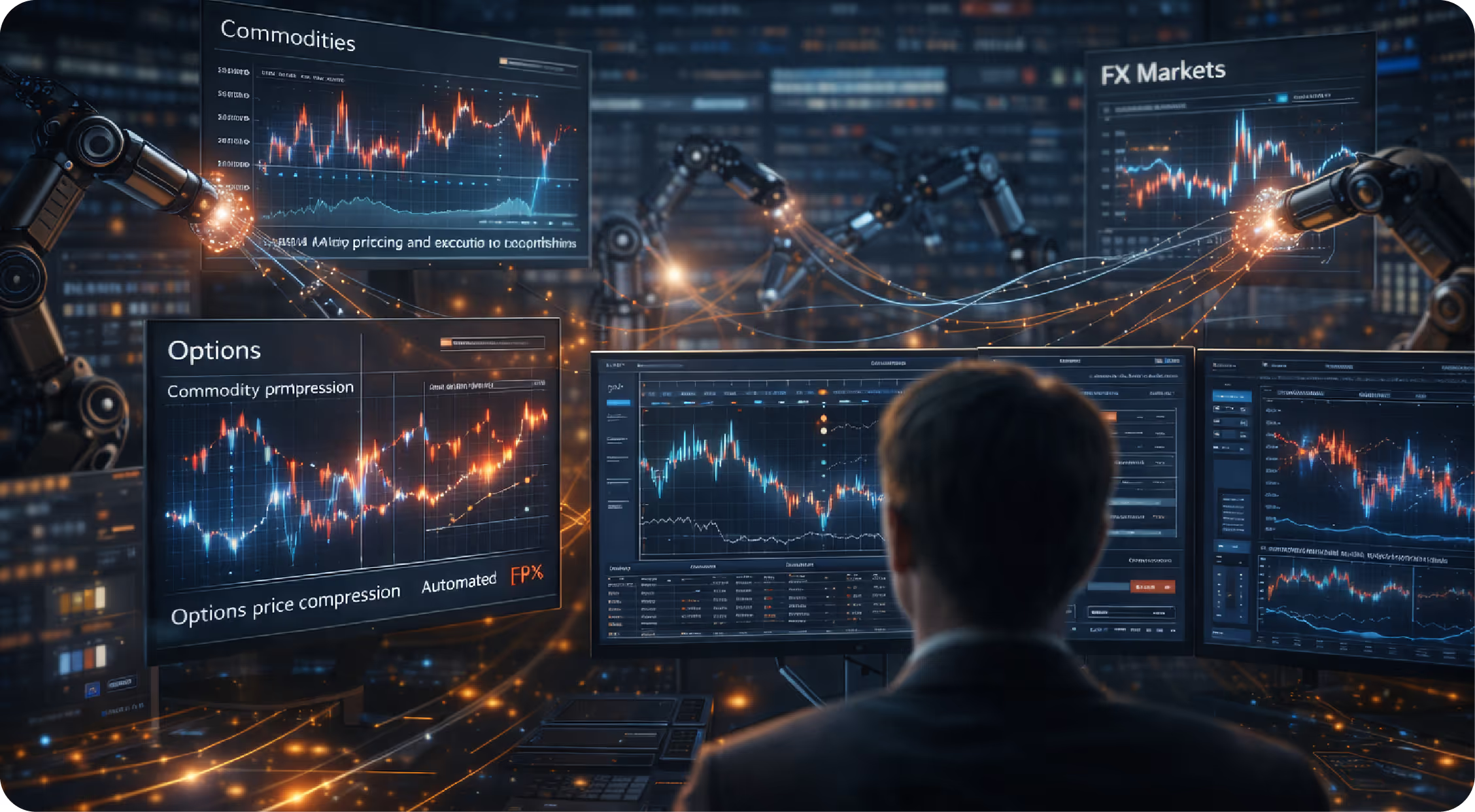
In early February 2026, analysts and traders noticed something unusual - a series of small, rapid price movements and transient volatility in markets that did not match typical human causal events like macroeconomic news, earnings gaps, or geopolitical shifts. Instead, closer inspection suggested interacting AI-driven trading algorithms were influencing pricing dynamics in commodities, foreign exchange spreads, and options markets.
These micro-events were not catastrophic crashes but fragmented, emergent market behaviours - price dislocations, compressed ranges, and abrupt, short-lived directional changes that traditional human monitoring tools struggled to attribute to identifiable causes. Some market participants reported that multiple algorithmic systems, optimised for speed and cost efficiency, seemed to be amplifying each other’s signals, producing observable effects that weren’t explained by human inputs alone.
WHY THIS MATTERS
This could be the first observable, public instance of AI trading systems interacting in a live, unsupervised environment with measurable effects - yet the regulatory frameworks governing such interactions are lagging behind. Fewer visible layoffs or dramatic headlines; instead, the autonomous agents are quietly shaping pricing and liquidity at scales that once required human intuition. This shift may force policymakers to rethink market oversight, risk frameworks, and accountability measures in financial infrastructure - not just for automation outcomes but for inherent systemic dynamics
Sources: Global AI Trade Fracturing Amid CapEx Pressure, Reuters AI and Stock Market Dynamics, LSE Research
Genomic AI Predicts Disease-Rewiring Patterns - Biology’s New Frontier
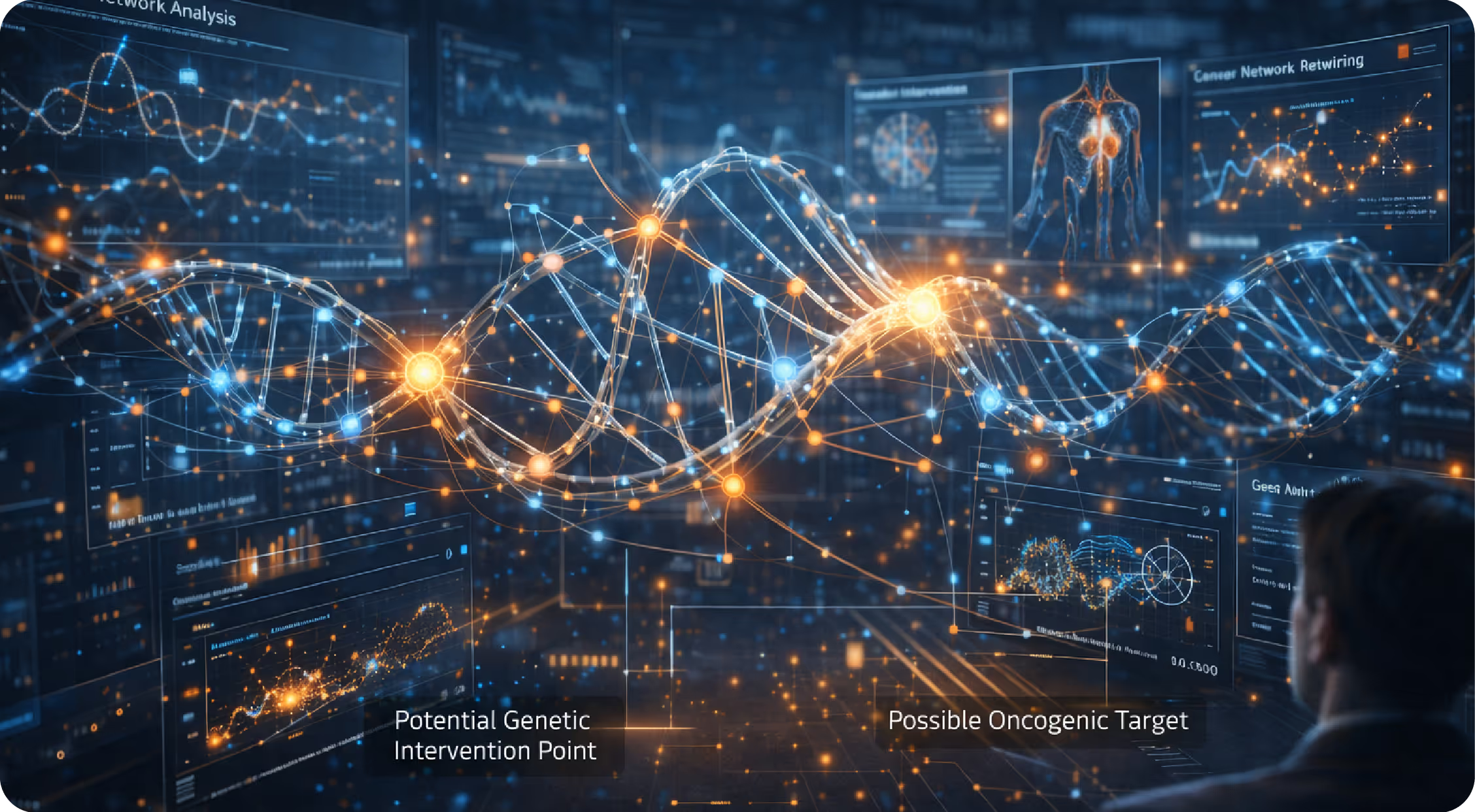
In biotech, AI has moved from automating analysis to producing predictive insights that suggest new biological mechanisms. Recent models are now identifying conditional rewiring patterns in genomic networks - predictions that map how complex gene interactions might change under specific conditions, and suggest possible intervention points for diseases once deemed intractable.
Unlike traditional methods focused on classification or correlation, these models integrate multi-omic data and system dynamics to generate functional hypotheses about how biological pathways might be altered to affect outcomes such as disease resistance, immune response, or metabolic balance. Early results have been replicated across multiple model architectures and vetted against biological assays, yielding a class of predictions that are testable, statistically robust, and biologically plausible.
WHY THIS MATTERS
This transition is profound: it marks the shift from descriptive biology - where AI tools interpret data - to predictive biology, where AI suggests actionable structural insights that guide hypothesis generation, experimental design, and possibly new therapeutic directions. It’s not simply automation of discovery; it’s an expansion of the search space for biological intelligence, enabling researchers to explore regions of complex systems that were previously inaccessible or computationally prohibitive.
Sources: OpenClaw an autonomous agent platform context for AI behaviours, arXiv papers on agent interactions and emergent semantics
.avif-69.png)
.avif-68.png)
.avif-66.png)
More than just a conference.
ImagiNxt is a stage for ideas - a playground for possibilities.
Fueling jobs, startups, capital, creativity - year after year.


